

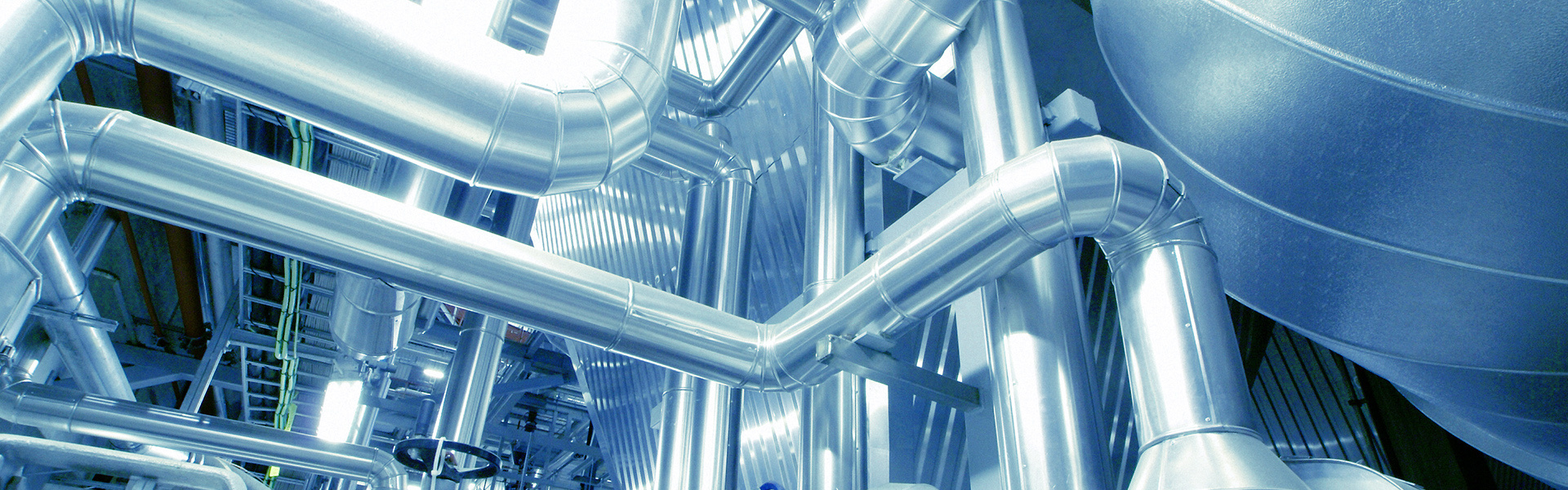
Welding fumes in the automotive body shop are a critical bottleneck that affects both production efficiency and worker health, while the renovation project for the aging workshop is further complicated by challenges such as "uninterrupted production required" and the intricate coordination between old and new systems. To accommodate the mass production of two new vehicle models, an automotive factory needed to upgrade the existing exhaust system in its aging weld shop. Leveraging its extensive experience in renovation projects and its robust full-process delivery capabilities, Suzhou Megaunity Air Systems Co., Ltd. successfully completed the system installation within a tight timeline—without disrupting the current production line and despite extremely demanding construction conditions. This not only resolved the persistent fume issue but also ensured that the new models could be rolled out on schedule.
Project Background: Overlapping Challenges and Core Requirements in the Transformation
As part of the old workshop upgrade project, this smoke extraction system not only needs to meet basic dust and fume control requirements but also tackle multiple renovation challenges. The core demands focus on four key dimensions:
1. Environmental Governance + Transformation Integration:
It is necessary to efficiently collect welding-generated fumes and harmful gases containing metals such as manganese and chromium, ensuring that air quality meets the occupational exposure limits specified in the "Occupational Exposure Limits for Hazardous Factors in Industrial Workplaces." Meanwhile, the existing ventilation system is already deeply integrated into the production line, so any renovation must enable seamless integration between new and old equipment—without disrupting the normal operation of the current production line at any stage. This places extremely high demands on the compatibility of the proposed solution and the precision of construction work.
2. Tight construction schedule + Limited construction access:
The project must align precisely with the new vehicle model’s mass-production schedule. Within one month after contract signing, the construction drawings—including calculation documents—must be completed. More critically, during the construction phase, certain areas of the workshop will still require concurrent operations, including high-altitude work. As a result, work can only be carried out during nighttime or weekend shutdowns. This poses a significant challenge to maintaining project continuity, as the entire system must be built within an extremely tight time frame.
3. Cost Optimization + Rigorous Quality Control:
The entire process must be "defect-free"—construction drawings and equipment materials must all meet specifications, the project quality must reach national acceptance standards, and duct installation must comply with the "Welding Process Standards for Supply and Exhaust Ductwork and Air Conditioning Fabrication Quality Inspection." Meanwhile, to maximize cost control as per customer requirements, existing equipment needs to be utilized efficiently.
Megaunity Solution: Breaking Barriers Across the Entire Process, Precisely Matching Transformation Needs
Addressing the core pain points of "difficult coordination, construction constraints, and tight budgets" in the renovation of old workshops, Megaunity adopts a "full-process general contracting + customized problem-solving" model, breaking through challenges throughout the entire journey—from design and construction to delivery—and focusing on resolving the key issues of renovation.
1. Precise Airflow Organization Design: Addressing the Defects of the Original System, Reducing Costs and Enhancing Efficiency
The original workshop ventilation system suffered from improperly installed air supply outlets, which easily led to airflow short-circuiting. Additionally, the dispersed dust-generating points resulted in low smoke extraction efficiency. Megaunity has optimized the airflow management plan by integrating the workshop layout with the specific characteristics of dust generation.
1. Adopting a "multi-point differentiated capture + centralized efficient treatment" model: For dust generation levels at different welding stations, equip dedicated fume hoods (such as side-suction or top-suction hoods), combined with localized enclosure designs, to ensure a fume capture efficiency of ≥95% and prevent diffusion into other areas.
2. Optimize pipeline routing: Through fluid dynamics simulation, minimizing pipe bends and resistance, the "shortest-path design" approach reduces material usage and minimizes both wind resistance and energy consumption—while ensuring effective smoke exhaust while cutting down on pipeline costs.
II. Collaboration Between New and Old Equipment: Significantly Reducing Costs for Customers
In response to customers' cost-control needs, Megaunity conducted a comprehensive evaluation of its existing dust removal equipment. Ultimately, 17 well-maintained dust removal units were repurposed, while only 6 new CFME6VLX1 modular integrated dust collectors were added, achieving the optimal configuration of "reusing old equipment + supplementing with new equipment."
1. Reuse of Existing Equipment: Conduct a comprehensive overhaul of the existing equipment, replace the filter elements, and upgrade the control system to ensure compatibility with the new system's air volume and pressure requirements, thereby preventing resource waste.
2. Recharging New Equipment: The Megaunity CFME6VLX1 modular dust removal unit features high-efficiency filter cartridges (with filtration accuracy down to 0.3μm and a filtration efficiency of ≥99.9%), offering excellent wear resistance and easy maintenance. Additionally, it is fully compatible with existing pipeline interfaces, allowing seamless integration into your system without the need for additional modifications—further reducing your project timeline.
III. Intelligent Control System: Achieving "On-Demand Adjustment + Energy Saving & Cost Reduction"
The project is equipped with multiple intelligent control systems, upgrading from "passive smoke exhaust" to "active adaptation," thereby meeting customers' long-term operational needs for energy efficiency.
1. Intelligent Smoke and Dust Concentration Control System: Real-time monitoring of dust and fume concentrations at each workstation, with automatic adjustment of the corresponding exhaust hood airflow—reducing the airflow when concentrations are low to avoid unnecessary energy consumption.
2. Line Section Control System: By dividing the control area according to the welding line, the fume extraction system for each corresponding area can be individually started or stopped, making it suitable for scenarios where only part of the workshop lines are in operation.
3. Central Control System: Integrate all equipment operation data to support remote monitoring, fault alerts, and historical data queries. In the future, operations and maintenance personnel can use computers or mobile devices to adjust parameters in real time, significantly reducing the workload of on-site operations.
IV. All-Process, High-Pressure Construction: Ensuring Delivery Under Stringent Conditions
Facing construction restrictions such as "work only at night/weekends, concurrent high-altitude operations, and no impact on existing production lines," Megaunity has developed a dedicated construction plan:
1. Schedule Management: Break down the key milestones of "Design - Material Preparation - Used-Item Inspection & Maintenance - Installation - Debugging," and further refine the construction tasks to fit each nightly or weekend window period. Hold weekly coordination meetings to address on-site issues promptly, ensuring that there are no schedule delays.
2. Construction Protection: For high-altitude operations, establish dedicated protective platforms, and set up physical barriers along with warning signs in areas where cross-work occurs, ensuring no interference with normal workshop production.
3. Rapid Debugging Training: After the system installation is complete, we’ll take advantage of the production downtime to carry out standalone and integrated debugging. At the same time, we’ll provide customers’ operators with “theory + hands-on” training, ensuring that the system can be put into immediate operation upon delivery.
V. After-Sales Service and Emergency Support: Ensuring Uninterrupted Production Line Operations
Considering the workshop's need to avoid production downtime, emergency bypasses have been installed in each critical system link. During maintenance, the system can be switched to the backup pipeline, ensuring uninterrupted smoke extraction in the workshop. Additionally, a 2-year warranty is provided, supported by Megaunity's remote monitoring platform that continuously tracks equipment performance in real time, enabling proactive fault alerts and significantly reducing downtime for maintenance and operations.
As a comprehensive service provider specializing in industrial environmental solutions and energy-saving initiatives, Megaunity has been deeply rooted in the air pollution control field for many years. We have already delivered high-quality exhaust gas treatment and process ventilation solutions to multiple industries, including automotive, lithium-ion batteries, and semiconductors. Moving forward, Megaunity will continue to drive innovation through technology, tailoring efficient, energy-saving, safe, and cost-effective environmental management solutions for more businesses—empowering industries to achieve green upgrades and contribute toward the "Dual Carbon" goals.

Industrial Air Handling System Solutions Provider
Tel:400-860-5288
E-mail: marketing@megaunity.com
Address:
No.300, Dongxin Road, Wuzhong District, Suzhou, Jiangsu, China
No.8, Shuzi 3rd Road, DD Port, Dalian Jinpu New Area, Liaoning, China
Copyright © 2022 Megaunity Air System Co., Ltd. All RIght Servered


